

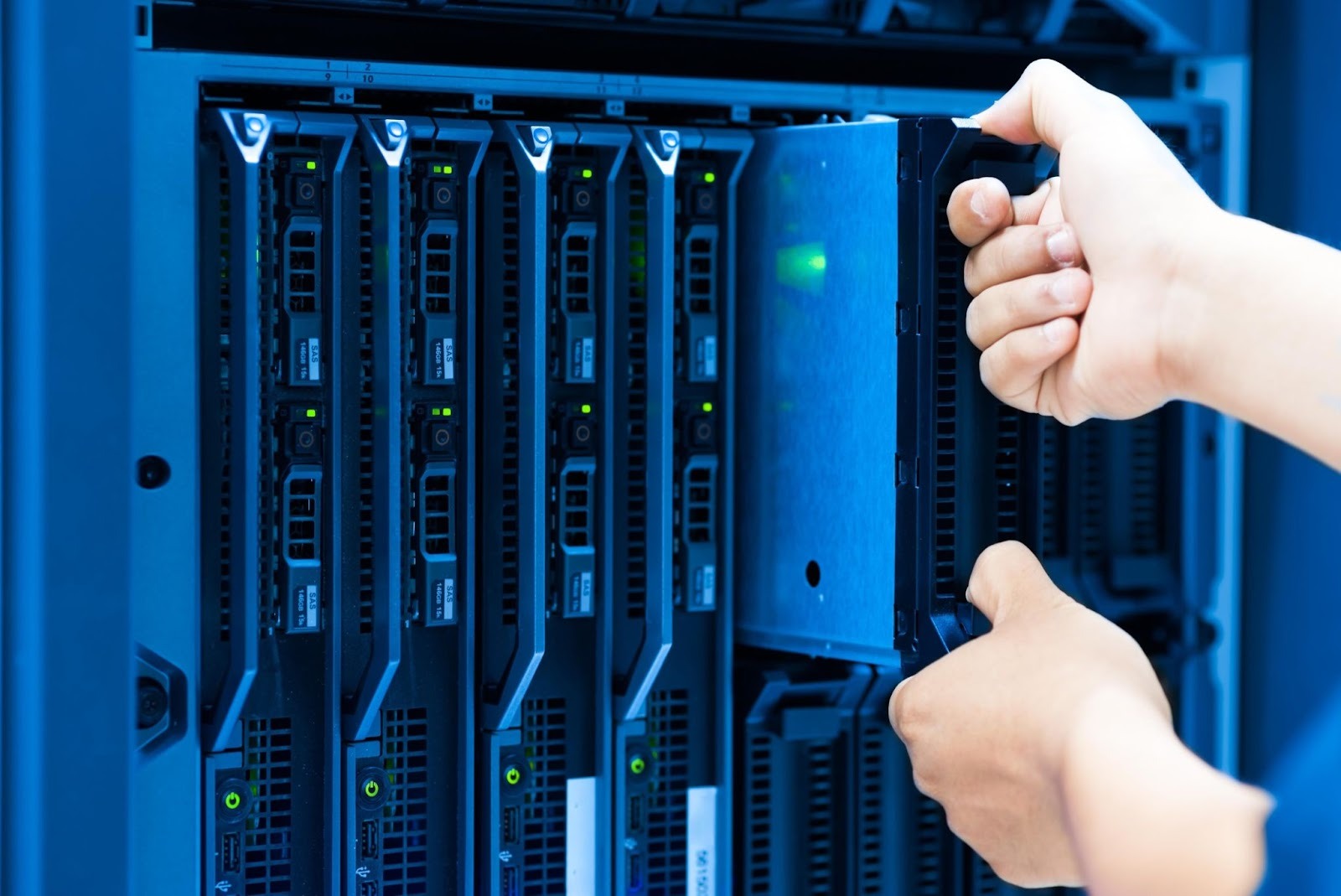
Servers are the pillars of most organizations in the digital age, used to store data, execute applications, and offer services. Nevertheless, they are placed at the center, and it is in their best interest to see that they are secured. In the context of aggressive cyber threats, effective server management is the key point you need to consider to improve the safety of your server and ensure your valuable assets are safely stored.
Realizing the Significance of Server security
The issue with server security is not an IT issue, it is an important part of the security posture of an organization. A hacked server may result in information leakage, loss of confidential data, loss of money, and tarnished image. IBM’s cost of a data breach report has also revealed that in 2023, the average cost of data breach was 4.45 million dollars, an indication that there is a significant need to have strong server security technologies in place.
Real-Life Case: In 2020, one of the largest healthcare institutions was a victim of a ransomware attack that paralyzed their servers and caused an unauthorized disclosure of patients. The financial losses and a massive blow to their image were caused by the attack. This attack highlights the essence of aggressive server maintenance and security measures.
Essential Server Management Hints to Customized Security
1. Introducing Intense Access Controls
Access control is one of the main elements of server security. Server resources should be accessed by only authorized personnel. The following should be implemented:
- Role-Based Access Control (RBAC): Grant permissions to the user based on user roles in the organization. This reduces chances of unauthorized access.
- Multi-Factor Authentication (MFA): Involve the use of several forms of authentication to verify users to the server. This further increases protection and an unwarranted user would find it hard to access.
Professional opinion: According to expert in cybersecurity Dr. Emily Carter, access control is a vital measure in averting unauthorized access to sensitive information. Even the most secure server could be hacked unless it is properly controlled.
2. Conduct Software Updates and Patches periodically
It is necessary to maintain server software to prevent vulnerability. Hackers usually use insecure software to have access to servers. Establish a routine for:
- Software Updates: Automatically remember to check and install updates to operating systems as well as applications operating in your servers.
- Patch Management: Adopt a patch management process to mitigate the existing vulnerabilities on time.
Real-Life Case: A global company did not install essential security patches to the software that it used in its server, and a significant amount of data was leaked. Following such an incident, they adopted a patch management policy, which eliminated the vulnerabilities by 40 percent during the first three months.
3. Firewalls and Intrusion Detection Systems
Firewalls can be seen as a gateway between your server and threats that can be introduced by the internet. They also oversee and manage the traffic inbound and outbound according to set security regulations.
- Network Firewalls: Secure the whole network by filtering the traffic till it gets to the server.
- Host-Based Firewalls: These firewalls are installed in the servers and offer an added protection of traffic both inbound and outbound to the server.
- Intrusion Detection Systems (IDS): These systems are used to check the activity of the servers on suspicious activity. Upon the identification of a potential threat, the IDS can either give an alert to the administrators, or employ automated response to eliminate threats.
- Profiling: Network security analyst Sarah Thompson notes that firewalls and IDS are important elements of an overall server security strategy. They assist in identifying and deterring an unauthorized entry prior to its damaging effects.
4. Regularly Back Up Data
Loss of data may happen because of multiple causes such as a technical malfunction of equipment, data hacking, or an environmental catastrophe. Frequent data backup will help to restore the vital information in case of an attack.
- Automated Backups: Configure automatic backup systems so that data is always automatically backed up without the need to do it manually.
- Offsite Backups: Keep the backups in an offsite environment that is secure or make use of cloud based solutions that would guarantee that data can be restored in case the master server is damaged.
Real-Life Situation: There was a firm that provided financial services and embedded a powerful backup policy, which encompassed daily automatic backups, and offsite storage. In a case when ransomware virus hits, they could restore their data fast and reduce downtime.
5. Check Server Performance on a Regular basis
The monitoring of the activity of the servers will assist in detecting possible threats before they become intense. Use the monitoring tools to monitor the main performance measures and security incidents.
- Log Management: Keep records of server logs and frequently examine them against patterns that are unusual or attempts of access by unauthorized persons.
- Alerts: Have alert systems that will alert the administrators of suspicious activity that would help respond to possible threats quickly.
Professional Opinion: According to IT consultant, Michael Green, it is important to monitor the activity of servers in order to ensure security. Detection of anomalies in time allows the organization to react promptly and curb the possible harm.
6. Ensure Physical security to the Servers
Physical security has been neglected in the management of servers, yet it is of equal importance. Make sure that the access to server rooms or data centers can be accessed by authorized personnel only.
- Access Controls: Have keycard controls or biometric access controls to access server locations.
- Surveillance Systems: Use security cameras to control the physical environment and prevent unauthorized access.
Real-Life Case: In one of the tech startups, a former worker gained access to the server room successfully without authorization. After the incident, they had increased physical security controls, such biometric access and 24/7 surveillance that greatly curbed the chances of unauthorized access.
7. Implement Data Encryption
The encryption of data is an important part of server security and is necessary to safeguard confidential information against unauthorized access. Encrypt data on rest (data at rest) and on transit (data in transit).
- Encryption Protocols: It should be encrypted using the set encryption standards like AES (Advanced Encryption Standard).
- SSL/TLS in Data in Transit: Data sent over the internet should be encrypted with the help of the protocols of the SSL/TLS to avoid eavesdropping.
Expert Insight: Dr. Laura Green, a data security expert agrees that encryption is an excellent tool for securing sensitive information. Encryption allows the safekeeping of data even in case it is intercepted but still, the data is unreadable by unauthorized individuals.
8. Develop a Detailed Incident Response Plan
Security incidents may still happen though good efforts have been made. The presence of an incident response plan helps organizations to effectively and swiftly respond to the incident to harm the organization as little as possible.
- Assign Roles and Responsibilities: The responsibilities of different people during the process of responding to an incident should be clearly defined.
- Frequent Training and Drills: One should carry out frequent training and simulated security incidents so that staff can be familiar with responding to the security incident.
Real-Life Occurrence: A big retail organization experienced a security breach and they engaged its incident response strategy which allowed them to restrain the breach in the matter of hours. Their readiness had a great effect minimizing the possible effect on the customers and the organization.
9. Conduct Periodical Security Audits
Regular security audits will enable the detection of weak spots and the evaluation of how the available security measures are performed. These audits should include:
- Vulnerability Assessment: Assess and rank vulnerabilities in applications and server configuration.
- Penetration Testing: Model cyberattacks that help test the efficiency of security controls and response strategies to cyberattacks.
Professional Opinion: Dr. Michael Johnson, a cybersecurity consultant, recommends regular security audits as a way of ensuring a good security posture. They assist the organizations to remain on top of the changing threats and are used to ensure that security provisions are satisfactory.
Future of Server security
Due to the ongoing development of technology, so are the threats posed to security of servers. The modern tendencies of artificial intelligence (AI) and machine learning (ML) have been gaining momentum to improve security measures of the server.
Expert Bootstrapping: Technology futurist Dr. Emily Carter estimates, The adoption of AI and ML into server security will transform how organizations identify and react to threats to enable more proactive and efficient security.
Conclusion
To improve security in a world that cyber threats are ever-changing, proper management of a server is a key to improving security. Organizations can mitigate the risk of breach significantly and reduce their valuable assets by employing the tips provided in this article.
Final Thoughts
- Server security is based on strong access controls and frequent software updates.
- Implementing continuous monitoring and data encryption is an added security measure.
- An incident response plan is essential towards rapid recovery of security incidents.
- Security audits are conducted regularly to ensure that security very well responds to changes in threats.
- With a focus on the server administration tips to increase the level of security, the organization will be able to address the challenges of the modern threat environment and protect the assets successfully.